
5 Myths About Fungi You Never Knew: Who Really Controls Your Food Cravings?
You stand in the pharmacy aisle, basket full of supplements, wondering why—despite your best efforts—you still feel exhausted, bloated, and unwell. Your great-grandmother never touched a vitamin bottle, yet lived vibrantly into her eighties. What did she know that we've forgotten? The answer might be growing wild beneath your feet. Let's uncover the ancestral wisdom that could revolutionize your health.
ANTI-INFLAMMATORY DIETS & PH BALANCE
Written by Lesia Le, PhD
12/18/20256 min read

The Hidden Dance: How Modern Food Betrays Your Body
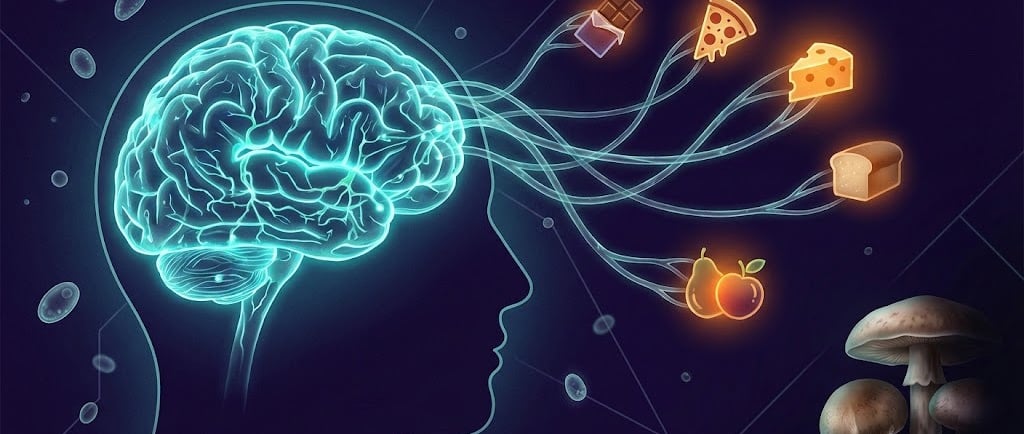
Here's a sobering truth: every time you eat refined sugar, you're not feeding yourself—you're feeding an invading army. Inside your gut lives a hidden ecosystem of yeast and fungal organisms that hijack your cravings, control your mood, and literally decide what you'll eat next.
The betrayal began in the 1950s-1960s. During this pivotal era, three catastrophic changes converged: refined sugar was whitewashed as a "brain food," industrial yeasts were introduced into our bread supply, and antibiotics became routine. This unholy trinity created the perfect storm for fungal overgrowth. These organisms don't just live passively in your intestines—they burrow through your intestinal walls like roots through soil, creating highways of inflammation throughout your body.
The mechanism is devastatingly clever. When sugar enters your bloodstream, fungal organisms consume it faster than your cells can. Your insulin receptors wait expectantly, but the glucose never arrives—stolen by microscopic pirates. Your cells cry out for energy, triggering more cravings. You eat another sweet treat. The cycle intensifies. Within months, insulin resistance develops. Within years, type 2 diabetes becomes inevitable.
Here's the shocking statistic: 85-86% of the population has immune conflicts with modern dairy proteins. Not lactose—proteins. Your ancestors who didn't herd cows for 2,000+ years never developed the genetic adaptations to digest bovine milk. Yet we consume it daily, wondering why our sinuses stay perpetually clogged.
Meanwhile, your pH levels plummet. Healthy humans maintain slightly alkaline blood (pH 7.43), yet modern diets create relentless acidification. In hospitals, emergency physicians immediately alkalize critical patients because acidosis equals death. Yet we walk around chronically acidic—tired, inflamed, vulnerable—and consider it normal.
Smart Strategies for Reclaiming Your Health
Test Your Morning pH
Before brushing your teeth, check your urine pH with test strips. Morning urine should be 6.0 minimum, evening 7.0 minimum. Below these? You're sliding toward disease. Alkalize immediately with mineral-rich wild plants—nettle tea, dandelion greens, horsetail extract. These deliver bioavailable calcium, magnesium, and silicon your body desperately needs.
Execute the Anti-Fungal Protocol
This isn't a two-week cleanse—it's a lifestyle shift. Combine alkalizing minerals (silicon first, then calcium and magnesium) with natural anti-fungals: horseradish, black walnut, turmeric, wormwood, yarrow. Our ancestors consumed these bitter, pungent plants daily, not occasionally. They understood what modern medicine forgot: prevention lives in your daily diet, not your medicine cabinet.
Embrace Radical Simplicity
Your ancestors thrived on 30-40 foods, not 300. Identify your personal safe foods through elimination and observation. Does your pulse increase more than 15% after eating? That food triggers inflammation. Do you feel sleepy, bloated, or mentally foggy post-meal? Your microbiome is rejecting it. Build your diet around 20-30 well-tolerated whole foods, supplemented with seasonal wild plants.
Choose Quality Over Convenience
That cheap multivitamin contains 10 active ingredients and 9 toxic fillers. Read labels ruthlessly. If a supplement lists flow agents, anti-caking compounds, artificial colors, or preservatives—reject it. Seek atomic forms of minerals, cell-based nutrition, or whole-food concentrates with nothing added. Yes, they cost more. So does chronic disease.
Repair Your Intestinal Walls
Fungal organisms don't just colonize your gut—they drill through it like mycelia through rotting wood. Heal this damage with slippery elm, aloe vera, collagen peptides, sea buckthorn oil, or seaweed extracts. These create protective barriers while your anti-fungal protocol kills invaders. Healing takes 3-6 months of consistent use.
Track Your Body's Intelligence
Keep a food journal noting energy, mood, digestive comfort, and cravings. If you crave sweets after eating rice, fungi are controlling you. If cabbage suddenly tastes delicious, your beneficial bacteria are recovering. Your body speaks clearly—you've simply forgotten its language. Relearn it through patient observation.
Debunking Common Myths
Myth 1: "Sugar is just energy—calories are calories."
Reality: Refined sugar is a fungal accelerant that disrupts insulin signaling, glycates proteins (accelerating aging), and creates chemical dependence stronger than willpower. Natural sugars from seasonal fruits come packaged with fiber, minerals, and enzymes that modulate absorption. Your body evolved to handle maple sap in spring, berries in summer—not year-round candy bars. The difference isn't semantic; it's biochemical warfare versus nourishment.
Myth 2: "Lactose-free dairy solves milk problems."
Reality: Your immune system doesn't react to lactose (a sugar)—it reacts to bovine proteins. Unless your ancestors herded cattle for millennia in Northern Europe or small pockets of Africa, you lack genetic adaptation. Chronic sinus congestion, post-nasal drip, recurring bronchitis, and persistent inflammation? Try eliminating all cow dairy for 30 days. Most experience dramatic improvement. Goat, sheep, or camel milk—proteins your nomadic ancestors knew—often work better.
Myth 3: "Willpower controls food choices."
Reality: You're not weak—you're colonized. Fungal organisms release neurotransmitter-like compounds that hijack brain signaling. When you "crave" sweets, yeast are chemically compelling you to feed them. Starve them, and they escalate: anxiety, irritability, obsessive food thoughts, even semi-conscious night eating. This isn't psychological—it's parasitic manipulation. Only by killing fungal overgrowth and rebuilding beneficial flora can you reclaim autonomy. Then cabbage genuinely tastes better than cake.
Myth 4: "Modern life expectancy proves we're healthier."
Reality: Reduced infant mortality and trauma surgery advances inflate statistics. But examine old cemetery records: pre-industrial humans who survived childhood often lived robustly into their eighties—with their teeth, hair, mental clarity, and physical strength intact. Today's 60-year-olds require pharmaceuticals to function. Quality of life has plummeted while we obsess over quantity. Our ancestors at 80 could mow fields; we can barely climb stairs.
Myth 5: "Wild plants are survival food, not real nutrition."
Reality: Wild plants concentrate minerals and protective compounds that cultivated vegetables have lost through selective breeding. One cup of nettle provides more calcium than milk, more iron than spinach, complete protein, and anti-inflammatory compounds absent from domesticated greens. Dandelion root offers insulin-regulating inulin and liver-regenerating bitter principles. These aren't desperate alternatives—they're superior nutrition that industrial agriculture abandoned for shelf life and shipping durability.
Essential Questions Answered
Q: How do I know if fungal overgrowth is my problem?
A: The home test is revealing: Before brushing teeth, spit into a glass of room-temperature water. Check it the next morning. Cloudy water, floating particles, or thread-like tendrils indicate significant candida overgrowth. Clinical signs include persistent sweet cravings, chronic bloating, brain fog, mood swings, skin breakouts, and the telltale coated tongue upon waking. If three or more apply, assume fungal dominance and begin the protocol.
Q: Can I ever eat normally again after going anti-fungal?
A: "Normal" is the problem—our baseline shifted toward disease. But yes, once you've restored beneficial flora, occasional indulgences won't devastate you. The key is maintaining the foundation: daily alkalizing foods, regular wild plant consumption, fermented vegetables, and minimal refined sugars. Think 80/20 rule: 80% therapeutic eating, 20% flexibility. Your improved microbiome will guide you toward better choices naturally.
Q: What if I can't identify or access wild plants?
A: Start with what's accessible. Farmer's markets often carry dandelion greens, nettle, and purslane. Asian groceries stock burdock root year-round. Health food stores sell dried herbs and tinctures. Even growing windowsill pots of parsley, cilantro, and mustard greens provides concentrated nutrition. The principle matters more than perfection: bitter, pungent, mineral-rich plants that your ancestors knew. Build knowledge gradually while using what's available now.
Q: How long before I see results from this approach?
A: pH improvement happens within days. Sugar cravings diminish within 2-3 weeks as fungal populations decline. Chronic inflammation reduces over 1-2 months. Full intestinal wall healing requires 3-6 months. Metabolic reversal (insulin sensitivity restoration) takes 6-12 months of consistent effort. This isn't a quick fix—it's a lifestyle recalibration. But unlike pharmaceutical dependency, it addresses root causes and builds genuine, lasting health.
Finding Your Personal Balance
The path forward isn't about perfection or deprivation—it's about reconnection. Reconnecting with the foods that built human health for millennia. Reconnecting with your body's innate intelligence. Reconnecting with seasonal rhythms and wild abundance.
This approach demands more than most modern diets: awareness, preparation, commitment. You'll face social friction when declining birthday cake. You'll spend time learning plant identification instead of scrolling social media. You'll cook more and rely less on convenience. But consider the alternative: decades of diminishing vitality, mounting medical bills, and pharmaceutical dependence.
Every individual's journey differs. Your safe foods, healing timeline, and optimal strategies will be uniquely yours. That's why testing matters—pH monitoring, food journals, professional food sensitivity panels if accessible. Work with practitioners knowledgeable in functional medicine, immunodietetics, or traditional herbalism who understand that standard protocols don't fit everyone.
The encouraging truth? Your body wants to heal. Given proper conditions—alkaline environment, beneficial microbes, nutrient-dense whole foods, minimal toxins—it possesses remarkable regenerative capacity. Those great-grandparents who thrived without supplements? They weren't superhuman. They simply lived in alignment with biological design, eating foods that healed rather than harmed.
You can reclaim that vitality. Start with one change: test your morning pH, ferment one vegetable, eliminate one inflammatory food, learn one wild plant. Each step builds momentum. Each success proves your body's responsiveness. Within months, you'll wonder how you tolerated feeling so poorly. Within a year, you'll recognize this as the most important investment you've ever made.
The forgotten wisdom of your ancestors isn't truly lost—it's waiting beneath your feet, growing wild in the margins of cultivated lands. All you need to do is remember, reconnect, and reclaim your birthright of vibrant health.
Wellness
Empowering health through personalized care solutions.
Care
Health
© 2025 Care Health Wellness. All Rights Reserved. Web Design and Digital Marketing by Webartline