
Can Sleeping Pills Kill You?
The Truth About Sleep Medication vs. Insomnia: What Every Person Should Know You lie awake at 3 AM, staring at the ceiling. Again. Your mind races with tomorrow's responsibilities while exhaustion weighs on your body. You've heard sleeping pills can help, but then a colleague mentioned they knew someone who became dependent. Another friend swears by them. So which is it—are sleeping pills a lifesaver or a dangerous trap? This isn't a simple question, and the answer might surprise you. As one sleep medicine specialist put it: "No one has died from insomnia, but thousands die from sleeping pills." Yet that same doctor also prescribes them regularly. How can both things be true? Let's untangle this together. The relationship between sleep medication and health is more nuanced than most people realize, and understanding it could transform how you approach your sleep struggles. Here's what we'll explore: the hidden dangers lurking in your medicine cabinet, the surprising connection between poor sleep and weight gain, and most importantly—smart strategies that don't require a prescription at all.
SLEEP
Written by Lesia Le, PhD
1/7/20269 min read
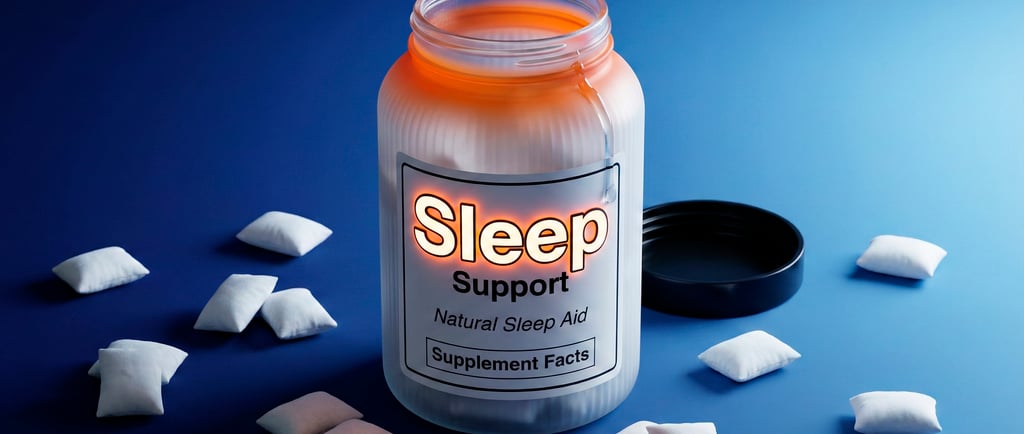
The Dangerous Dance: How Sleeping Pills Become a Trap
Here's the paradox that catches millions: sleeping pills work beautifully—until they don't. And by then, you're caught in a cycle that's remarkably difficult to escape.
When you take a sleeping pill for acute insomnia caused by stress, it can be genuinely helpful. The medication calms your nervous system, breaks the anxiety-insomnia cycle, and gives your body a chance to reset. Used properly—6 to 8 times per month—the risk of dependency remains minimal.
But here's where the trap springs: chronic insomnia is fundamentally different. If your sleep problems persist beyond three months, something deeper is maintaining that insomnia. Taking sleeping pills without addressing the root cause is like taking fever medication for an infection that lasts three months—you're masking symptoms while the underlying problem festers.
Here's the sobering fact: When older adults take sleeping pills long-term, they face dramatically increased risks. Cognitive decline accelerates. Fall-related fractures multiply. Quality of life deteriorates as they transform, in one neurologist's words, into "semi-vegetables." And these aren't rare side effects—they're common outcomes of chronic use, especially when doctors prescribe escalating doses to maintain the same effect.
The mechanism of dependency is insidious. Your body adapts to the medication within weeks. When you try to stop, withdrawal symptoms make your insomnia worse than it was originally. Combined with the unresolved underlying cause, you're left in a worse position than when you started. Doctors then often prescribe a second medication, then a third. Some patients arrive at sleep clinics taking four different sleep medications simultaneously—none of them working, all of them causing side effects.
Smart Strategies for Natural Sleep Recovery
Before reaching for medication, these evidence-based approaches can dramatically improve sleep quality. Research shows that for many people, these methods work as well as or better than prescription drugs—without the risks.
1. Master Your Sleep Schedule (The Foundation)
Over 50% of urban residents suffer from "social jetlag"—sleeping late on weekends to compensate for weekday sleep debt. If you normally wake at 7 AM but sleep until noon on weekends, you're essentially flying from Khabarovsk to Moscow every Friday and back every Sunday. Your body's internal clock can't keep up. The solution is counterintuitive: wake up at the same time every single day, even weekends. Give this two weeks. Most people report life-changing improvements in how they feel upon waking.
2. Exercise: The Prescription Without a Prescription
A 2023 meta-analysis following over 100,000 people for 30 years revealed something remarkable: regular moderate-intensity exercise (300-600 minutes of brisk walking weekly, or 45-90 minutes daily) or high-intensity exercise (150-300 minutes weekly, or 20-40 minutes daily) proved more effective than both medication and psychotherapy for treating anxiety, depression, and insomnia. Not equally effective—more effective. The evidence is overwhelming, yet this remains the most under-prescribed treatment in medicine.
3. Eliminate Caffeine (The Hidden Sleep Destroyer)
Caffeine doesn't just interfere with falling asleep—it amplifies your stress response all day long. Even morning coffee makes you hyper-reactive to afternoon stressors, creating evening anxiety that prevents sleep. One patient drinking eight cups daily experienced week-long withdrawal symptoms (muscle aches, headaches) but completely resolved his insomnia within two weeks of quitting. No medication needed. If you struggle with sleep, this single change might be transformative. (Note: green tea contains more caffeine than black tea, and both count.)
4. Respect the 15-Minute Rule (Breaking the Anxiety Cycle)
If you don't fall asleep within 15 minutes, get out of bed. Go to another room and do something mildly boring—folding laundry, reading something unstimulating, watching a documentary about animals. Return only when genuinely sleepy. Why? Your brain is forming associations. If you lie awake anxious for hours every night, your bed becomes a trigger for anxiety rather than sleep. Breaking this association is crucial. Yes, you'll sleep less initially, but you'll sleep better overall.
5. Create Your Sleep Sanctuary (Optimize Your Environment)
Forget the myth that sleeping on a hard surface is healthy—that's a holdover from when people had sagging bed frames. Your body has natural curves; your mattress should support them. Choose a mattress with a comfort layer that contours to your body while keeping your spine aligned. For most people under 180 pounds, that means medium-soft; above that weight, medium-firm. Maintain humidity at 50-60% (winter indoor air can drop below 20%, literally Sahara Desert levels, causing nasal congestion and skin problems). Install blackout curtains—summer sunrise at 3:30 AM will wake you even through closed eyelids. Keep it quiet, or use white noise. These aren't luxuries; they're necessities.
6. Time Your Meals (The Digestive Factor)
Finish dinner at least three hours before bed, and make it no more than 20% of your daily calories. Digesting 200 grams of meat requires 100 calories of energy—equivalent to running at 10 km/h for 10 minutes. Your digestive system is a furnace burning all night if you eat heavily before bed. Your brain monitors this internal activity, fragmenting your sleep with frequent micro-awakenings. You wake feeling unrested even after 8 hours.
7. Understand Your Personal Sleep Need (Respect Your Genetics)
Sleep duration is genetically determined, ranging from 4 to 12 hours with an average of 7-9. Einstein needed 12 hours; Napoleon claimed 4. Trying to force yourself to sleep longer than your body needs creates insomnia. Many retirees develop severe insomnia simply because they lie in bed for 8 hours when they only need 5. Their doctor prescribes sleeping pills to make them sleep more, when the solution is spending less time in bed. Paradoxically, this often cures the "insomnia" completely.
8. Use Alcohol Wisely—Or Not At All (The Deceptive Sedative)
Alcohol is, as one specialist noted, "an excellent short-acting antidepressant—that lasts 4 hours, so you need to take it six times a day." Small amounts (150-200ml wine, or 20ml pure alcohol) occasionally may reduce stress and help sleep. But daily use for sleep quickly becomes dependence. One patient was drinking 1.5 bottles of wine nightly "because I can't sleep otherwise." That's no longer medicine—it's addiction. The cutoff for dependency risk? Six to eight uses per month. More frequent than that, and you're on a dangerous path.
Debunking Common Sleep Myths
Myth 1: "Sleeping before midnight is worth more than sleeping after midnight"
Reality: Complete nonsense. Astronauts on the International Space Station sleep on schedule regardless of 45-minute day-night cycles, and their hormone production adjusts perfectly. What matters is consistency, not clock time. Whether you sleep 10 PM-6 AM or 2 AM-10 AM makes no difference, provided you maintain that schedule and create proper darkness during your sleep period. Your melatonin and growth hormone production will synchronize to your personal rhythm.
Myth 2: "You can catch up on sleep during weekends"
Reality: Sleeping in on weekends creates social jetlag that ruins your entire week. If you sleep 7-hour nights Monday-Friday then 12-hour nights on weekends, you've shifted your circadian rhythm 5 hours later. That's like flying across five time zones. Come Sunday night, you can't fall asleep at your "normal" bedtime because your body clock now expects sleep at 5 AM. You lie awake frustrated, start the week exhausted, and perpetuate the cycle. The solution: maintain the same wake time seven days a week. Life-changing.
Myth 3: "Sleeping on a firm mattress is healthier for your back"
Reality: This myth originated from post-revolutionary Russia when workers slept on floors and planks while the aristocracy had beds. It persisted through the Soviet era of sagging metal bed frames. Your body isn't flat—your spine has four curves. A proper mattress should be level enough to keep your spine aligned while soft enough to contour to your body's shape, eliminating pressure points. Too-firm mattresses cause constant micro-awakenings as your body signals discomfort. The result: shallow, unrefreshing sleep.
Myth 4: "Taking melatonin supplements helps everyone sleep better"
Reality: If you maintain a consistent sleep schedule and you're under 55 years old, supplemental melatonin does nothing—your body already produces peak melatonin at the right time. Research shows added melatonin only works in specific situations: jet lag when you need to sleep at an unusual time, shift work, or people over 55 whose natural melatonin production has declined. For everyone else maintaining regular schedules, it's an expensive placebo.
Myth 5: "Hitting snooze for 'just 10 more minutes' ruins your sleep quality"
Reality: Hitting snooze once or twice for 5-10 minutes is harmless and can even provide a pleasant gradual awakening. You're not entering a "different sleep phase" in 5 minutes—if you're in REM sleep, you'll likely re-enter REM within a minute. The problem is excessive snoozing: setting your alarm an hour early and hitting snooze 10 times wastes a full sleep cycle you could have spent in quality continuous sleep. Use snooze sparingly (15 minutes total maximum), and you're fine.
Important Questions Answered
Q: How does poor sleep actually cause weight gain?
A: The mechanism is devastatingly efficient. During deep sleep, your body produces growth hormone, which converts food energy into muscle mass. When sleep becomes fragmented and shallow, growth hormone production plummets, causing that same energy to convert into fat instead. Simultaneously, disrupted sleep increases ghrelin (the hunger hormone), making you ravenous, while decreasing leptin sensitivity (the satiety hormone), so you never feel full. The result: you're constantly hungry, you overeat, and every excess calorie becomes fat rather than muscle. One study found that weight-loss medications like Ozempic often fail in people with untreated sleep apnea—the metabolic dysfunction from poor sleep overwhelms the medication's effects.
Q: What are the warning signs of sleep apnea, and why is it dangerous?
A: Watch for these red flags: loud snoring with breathing pauses during sleep (sometimes up to a minute), night sweats (especially upper body, head, neck, and chest), morning and evening high blood pressure (particularly elevated lower numbers), and frequent nighttime urination with a full bladder (3-4 times nightly). Sleep apnea causes 500-700 breathing cessations per night in severe cases. Each stoppage spikes your blood pressure, floods your body with stress hormones, and starves your tissues of oxygen. Long-term consequences include five times higher risk of cardiovascular death, greatly increased stroke and heart attack risk, severe daytime sleepiness that makes driving dangerous, erectile dysfunction, and accelerated cognitive decline. At a BMI of 40 or higher, nearly everyone has severe obstructive sleep apnea.
Q: Should couples sleep in separate beds for better sleep quality?
A: Research consistently shows that sleeping with a partner objectively worsens sleep quality—partners move, snore, have different temperature preferences, and disturb each other. The Western trend toward "sleep divorce" acknowledges this reality. However, there's an emotional component: some people (often women in traditional relationships) feel less anxious sleeping next to their partner, which can offset the sleep disruption. Interestingly, these anxious sleepers often use weighted blankets when alone, recreating the reassuring pressure. For independent personalities, separate beds often mean dramatically better sleep. The decision should balance objective sleep quality against emotional comfort—there's no universal answer.
Q: Is it ever appropriate to take sleeping pills long-term?
A: Rarely, and only after exhaustive investigation. Chronic insomnia lasting beyond three months always has an underlying cause—sleep apnea, restless leg syndrome, anxiety disorder, circadian rhythm misalignment, paradoxical insomnia (sleeping more than you realize), medication side effects, or dozens of other possibilities. Taking sleeping pills without identifying and treating the root cause is medical malpractice. It's like taking painkillers for chest pain that turns out to be a heart attack—you're masking a symptom that should prompt investigation. For acute insomnia (less than three months, typically stress-related), short-term medication use at 6-8 times monthly is reasonable and low-risk. For chronic cases, cognitive behavioral therapy for insomnia (CBT-I) has proven more effective than medication without any side effects.
Finding Your Personal Balance
Sleep medicine isn't black and white. Sleeping pills aren't universally evil, nor is insomnia trivial. The truth lives in the nuance.
If you're struggling with sleep, start with the foundational strategies: consistent wake times, regular exercise, caffeine elimination, optimized sleep environment, and the 15-minute rule. Give these evidence-based approaches a genuine two-week trial. Many people discover they never needed medication at all.
If problems persist beyond three months, don't simply accept a prescription for sleeping pills. Insist on investigation. Sleep studies can identify apnea. Sleep diaries reveal paradoxical insomnia or circadian misalignment. Comprehensive evaluation uncovers thyroid disorders, restless legs, or medication interactions. The underlying cause needs treatment, not just symptom suppression.
For acute insomnia during genuinely stressful periods—divorce, bereavement, job crisis—appropriate short-term medication use can prevent acute insomnia from becoming chronic. That's responsible medicine. But escalating doses, multiple medications, and years-long prescriptions without investigation represent a failure of care that damages patient health.
Your sleep is deeply personal. Your optimal duration might be 5 hours or 10 hours. Your ideal schedule might be night owl or early bird. Your perfect mattress firmness differs from others. There's no one-size-fits-all prescription for sleep health.
What remains universal: quality sleep dramatically influences your weight, mood, cardiovascular health, cognitive function, and lifespan. It's not a luxury—it's a biological necessity on par with nutrition and exercise. When you prioritize sleep through informed choices rather than pharmaceutical shortcuts, you invest in decades of better health.
The most important question isn't whether sleeping pills are good or bad. It's whether you're addressing your sleep problems with wisdom, patience, and professional guidance—or merely masking symptoms while deeper issues remain unresolved. Your future self will thank you for choosing the harder but more sustainable path.
Wellness
Empowering health through personalized care solutions.
Care
Health
© 2025 Care Health Wellness. All Rights Reserved. Web Design and Digital Marketing by Webartline