
Can't Fall Asleep? Why the 15-Minute Rule Might Save Your Nights
How staying in bed could be making your insomnia worse We've all been there. You climb into bed exhausted, ready for sleep, but your mind has other plans. Twenty minutes pass. Then forty. You toss, turn, and watch the ceiling fan make lazy circles while anxiety creeps in about tomorrow's early meeting. Should you stay put and wait it out, or is lying there actually making things worse? Here's a truth that might surprise you: staying in bed when you can't sleep can train your brain to associate your bedroom with frustration and wakefulness rather than rest. Let's explore why getting out of bed might be the counterintuitive solution you need, and how the 15-minute rule can break the cycle of sleepless nights.
SLEEP
Written by Lesia Le, PhD
1/20/20268 min read
The Insidious Dance: How Your Bed Becomes Your Enemy
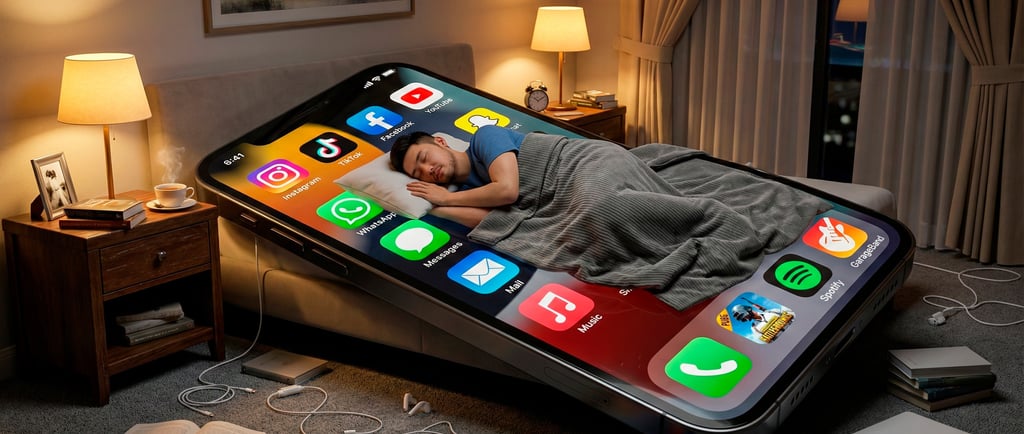
Your brain is remarkably good at forming associations. When you repeatedly lie awake in bed, staring at the darkness and feeling stressed, you're unwittingly training your brain to connect your bedroom with anxiety rather than sleep. Sleep specialists call this phenomenon conditioned arousal—and it's one of the most common perpetuators of chronic insomnia.
The process works like Pavlov's dogs, but in reverse. Instead of salivating at the sound of a bell, you become alert and anxious when approaching your bed. One sleep medicine specialist describes patients who report an almost immediate loss of drowsiness the moment they walk toward their bedroom. They can barely keep their eyes open on the couch, but the instant they lie down, sleep vanishes as if by magic.
Here's the sobering fact: This conditioned response can develop in just two to three weeks of poor sleep. Once established, it becomes self-perpetuating. You worry about not sleeping, which makes you more alert, which prevents sleep, which increases worry—a vicious spiral that can persist for months or even years without intervention.
The 15-minute rule addresses this head-on. The principle is deceptively simple: if you haven't fallen asleep within 15 minutes of lying down, get up. Leave the bedroom and engage in a quiet, non-stimulating activity until you feel genuinely drowsy again. The goal isn't to accumulate hours lying in bed—it's to rebuild the powerful association between your bed and successful sleep.
But why 15 minutes? Research shows this is the typical window during which healthy sleepers transition from wakefulness to sleep. Beyond this threshold, continued wakefulness begins to reinforce negative conditioning. Some experts suggest you can extend this to 20 minutes, but the key insight remains: prolonged wakefulness in bed is counterproductive.
Smart Strategies for Reclaiming Your Sleep
1. Master the 15-Minute Exit
When sleep doesn't come within 15 minutes, resist the urge to stay put. Get up and move to another room with dim lighting. Choose boring activities: fold laundry, read something unstimulating (tax documents work wonders), or listen to a quiet podcast. The activity should be dull enough that your brain doesn't engage, but engaging enough to distract from sleep anxiety. Return to bed only when you feel truly drowsy—those heavy eyelids and involuntary yawns are your green light.
2. Establish an Unshakeable Wake Time
This might be the hardest rule to follow, but it's also the most powerful. Wake up at the same time every day, regardless of how much you slept the night before. Yes, even on weekends. Even after a terrible night. This consistency anchors your circadian rhythm and builds sleep pressure—the biological drive for sleep that accumulates throughout the day. Most people who implement this strategy see dramatic improvements within two weeks.
3. Create a Genuine Wind-Down Ritual
Your journey to bed begins hours before you actually lie down. Start dimming lights 90 minutes before bedtime. Put away screens (yes, all of them) at least an hour before sleep. Engage in genuinely relaxing activities—gentle stretching, reading physical books, taking a warm bath. The bath is particularly effective: your body temperature drops afterward, mimicking the natural temperature decrease that signals sleep time.
4. Redesign Your Sleep Environment
Your bedroom should be a cave: cool (65-68°F or 18-20°C), dark, and quiet. Invest in blackout curtains—summer sunrise at 3:30 AM will sabotage even the most resilient sleeper. Maintain humidity between 50-60% with a humidifier; winter heating can drop indoor humidity below 20%, drying out your airways and causing disruptive breathing issues. Choose a mattress that supports your spine without creating pressure points—the myth of ultra-firm mattresses being healthier is just that, a myth.
5. Cut Off Caffeine by 2 PM
Caffeine's half-life is 5-6 hours, but traces can linger much longer. That 4 PM coffee might still be affecting your nervous system at midnight. Even if you feel like you can drink coffee at 8 PM and sleep fine, you're likely experiencing more fragmented sleep with fewer restorative deep sleep stages. Caffeine doesn't just prevent sleep onset—it makes you more reactive to stress throughout the day, increasing overall arousal levels.
6. Embrace Strategic Daytime Activity
Regular physical activity is one of the most effective non-pharmacological sleep aids. Aim for 150-300 minutes of moderate activity weekly (brisk walking counts) or 75-150 minutes of vigorous exercise. Morning exercise is ideal, but any movement is beneficial. A major study following over 100,000 people for 30 years found that regular exercisers enjoyed significantly better sleep quality and fewer insomnia symptoms than sedentary individuals.
7. Time Your Last Meal Carefully
Finish dinner at least three hours before bed, and keep it moderate—no more than 20% of your daily calories. Digesting a large meal requires substantial metabolic activity, keeping your nervous system more alert. It's like asking your body to run a marathon while trying to sleep. Light hunger is fine; a growling stomach won't prevent sleep, but a stuffed one definitely will.
8. Limit Alcohol as a Sleep Aid
While alcohol may help you fall asleep faster, it fragments your sleep architecture, particularly reducing REM sleep—the stage crucial for memory consolidation and emotional regulation. Using alcohol nightly as a sleep aid is a direct path to dependence. If you drink, limit intake to 6-8 occasions per month maximum, just as you would with prescription sleep medications, to avoid developing tolerance or dependency.
Debunking Common Sleep Myths
Myth 1: "You need 8 hours of sleep every night."
Reality: Sleep needs are genetically determined and vary dramatically between individuals. While 7-9 hours is the average range, some people genuinely thrive on 5-6 hours, while others require 9-10 hours. Napoleon famously slept 4 hours (though historians debate this claim), while Einstein reportedly needed 12. Forcing yourself to stay in bed for 8 hours when you only need 6 can actually cause insomnia by reducing sleep pressure. The key question isn't how long you sleep, but whether you feel refreshed and function well during the day.
Myth 2: "Sleep before midnight is more valuable than sleep after midnight."
Reality: This persistent myth has no scientific basis. Sleep quality depends on consistency and alignment with your circadian rhythm, not the clock time. Astronauts on the International Space Station maintain excellent sleep quality despite experiencing 45-minute day-night cycles that bear no relationship to Earth time. If you consistently sleep from 2 AM to 10 AM, your body's hormone production—including melatonin and growth hormone—will adjust to that schedule. What matters is maintaining the same sleep-wake schedule daily, regardless of when it falls.
Myth 3: "Firm mattresses are better for your back and sleep."
Reality: This outdated advice likely originated from an era when most mattresses were sagging, wire-spring disasters. Modern research shows that mattresses should be supportive enough to keep your spine aligned, but soft enough to cushion pressure points. Overly firm surfaces force your body to rest on high-pressure points (shoulders, hips), causing discomfort that triggers frequent position changes and lighter sleep. The ideal mattress contours to your body shape while maintaining spinal alignment—what sleep specialists call medium-firm with a comfort layer.
Myth 4: "Eating protein before bed boosts growth hormone and helps you lose weight overnight."
Reality: While growth hormone is indeed produced during deep sleep, eating before bed doesn't enhance this process. In fact, late-night eating—regardless of macronutrient composition—disrupts sleep quality by activating your digestive system when your body is trying to rest. It's like asking your body to simultaneously relax and perform intensive work. The "lose weight while sleeping" claims are marketing fiction. Focus on finishing meals 3+ hours before bedtime for the best sleep quality.
Myth 5: "Napping will ruin your nighttime sleep."
Reality: Short naps (15-30 minutes) can refresh you without interfering with nighttime sleep—as long as they're taken before 2 PM. The problem arises with longer naps or late-afternoon naps that reduce your sleep pressure for the night. Think of sleep pressure like appetite: a big afternoon snack will indeed reduce your dinner appetite. However, if you're chronically sleep-deprived (say, a new parent), napping when your infant sleeps isn't just acceptable—it's necessary for survival. The key is testing: if you nap and still sleep well at night, you're fine. If nighttime sleep suffers, skip the nap.
Essential Questions Answered
Q: What if I get up every night and never fall asleep within 15 minutes? Won't I lose even more sleep?
A: This concern is common but misplaced. You're already not sleeping during those wakeful periods, so you're not losing additional sleep by getting up. What you are doing is preventing the conditioning that perpetuates insomnia. Most people find that after consistently applying the 15-minute rule for 1-2 weeks, they begin falling asleep more quickly. You're essentially retraining your brain's sleep associations, and yes, it may feel worse before it feels better. The temporary discomfort is worth the long-term gain.
Q: Can I check my phone or watch TV when I get up during the night?
A: Absolutely not. Blue light from screens suppresses melatonin production and activates your brain's alertness systems. Stick to dim light and genuinely boring activities. Read that insurance policy you've been meaning to understand. Fold socks. Do anything that occupies your hands without engaging your mind. The goal is to be mildly bored—not stimulated—so sleepiness can return naturally.
Q: I sleep with a partner who snores loudly. Should I still follow these rules?
A: Loud snoring—especially with gasping or breathing pauses—may indicate sleep apnea, a serious condition that affects both the snorer and their partner. If your partner's snoring prevents your sleep, encourage them to see a sleep specialist. In the meantime, consider separate sleeping arrangements. Research shows that couples who sleep together generally experience worse sleep quality than when sleeping alone, though emotional factors sometimes outweigh the sleep disruption. There's no shame in separate bedrooms if it means both partners sleep better.
Q: Is it okay to use melatonin supplements?
A: Melatonin works best for specific situations: jet lag, shift work, or for people over 55 whose natural melatonin production has declined. If you have a consistent sleep schedule and you're under 55, additional melatonin typically won't help—your body already produces it at the right time. Melatonin is a signal that tells your body it's time to sleep, not a sedative that forces sleep. If you do use it, take 0.5-3 mg about 2 hours before your target bedtime, not right before bed.
Finding Your Personal Balance
Sleep is deeply individual. What works for your neighbor might not work for you, and that's perfectly normal. The 15-minute rule isn't about rigid adherence to a timer—it's about recognizing when wakefulness is reinforcing poor sleep associations and taking action to break that cycle.
The strategies outlined here are evidence-based and effective for most people with insomnia, but they're not one-size-fits-all. Some people have underlying conditions—sleep apnea, restless legs syndrome, circadian rhythm disorders—that require specialized treatment. If you've consistently applied good sleep hygiene for 4-6 weeks without improvement, it's time to consult a sleep specialist. Chronic insomnia doesn't make you weak; it makes you human.
Remember: the goal isn't perfect sleep every night. Even excellent sleepers have occasional rough nights. The goal is to break the anxiety cycle around sleep and rebuild trust in your body's natural ability to rest. By removing yourself from bed when sleep won't come, you're not admitting defeat—you're taking active control of your sleep health.
Your bed should be a sanctuary, not a battleground. Give it time. Be patient with yourself. Sleep will return when your brain learns once again that your bed is a place of rest, not frustration. The 15-minute rule is your first step toward reclaiming your nights—and your days.
Wellness
Empowering health through personalized care solutions.
Care
Health
© 2025 Care Health Wellness. All Rights Reserved. Web Design and Digital Marketing by Webartline